FDR — Feeder Data Reporter
Try FDR free →
Free beta for utility engineers. No sales call, no credit card.
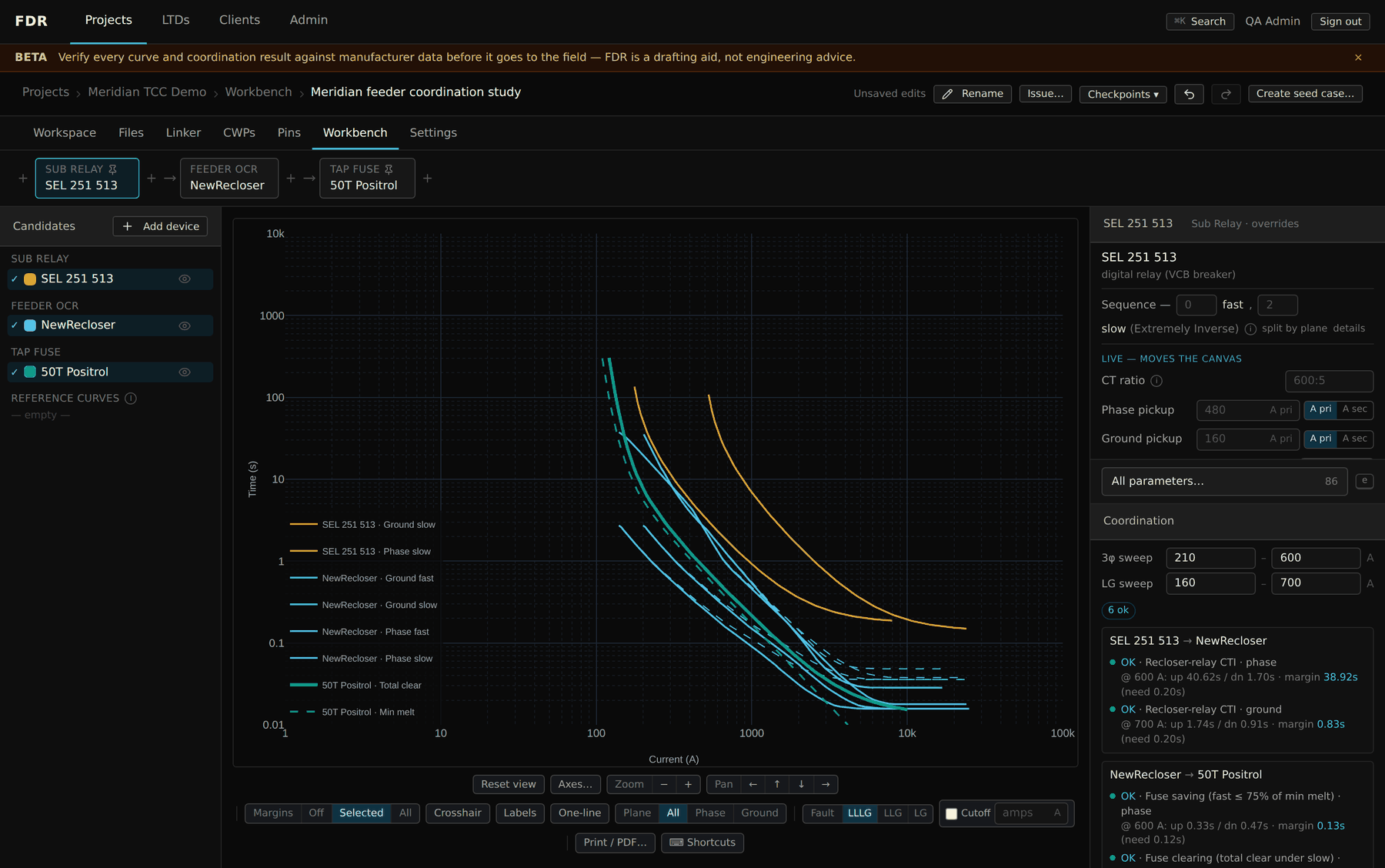
Every distribution engineer who works in Milsoft knows the grind: model data lives in WindMil, device libraries live in LightTable, and getting a clean coordination study out of them means hours of manual export, cross-checking, and reformatting. We built FDR to do that work.
WHAT IT DOES
- Analyzes WindMil power-flow models and reports on feeder data quality
- Reads and manages Milsoft LightTable device libraries, with a firm, client, and project scope chain
- Generates coordination studies from the model and library, formatted for delivery
WHY WE BUILT IT
FDR started as our own internal tool. We run enough model validations and coordination studies that the manual steps were worth automating, so we automated them, then opened the tool to other engineers.
The same firm that runs your coordination study wrote the software that produces it.
FDR is in free beta at fdr.sixtymountain.com. STAKR, our member-facing staking estimator, lives at stakrapp.com.
BOTTOM LINE
- Engineers needed the WindMil-to-study grind automated.
- Our team built the tool, uses it daily, and shares it free while it grows.
The transfer scheme nobody could explain
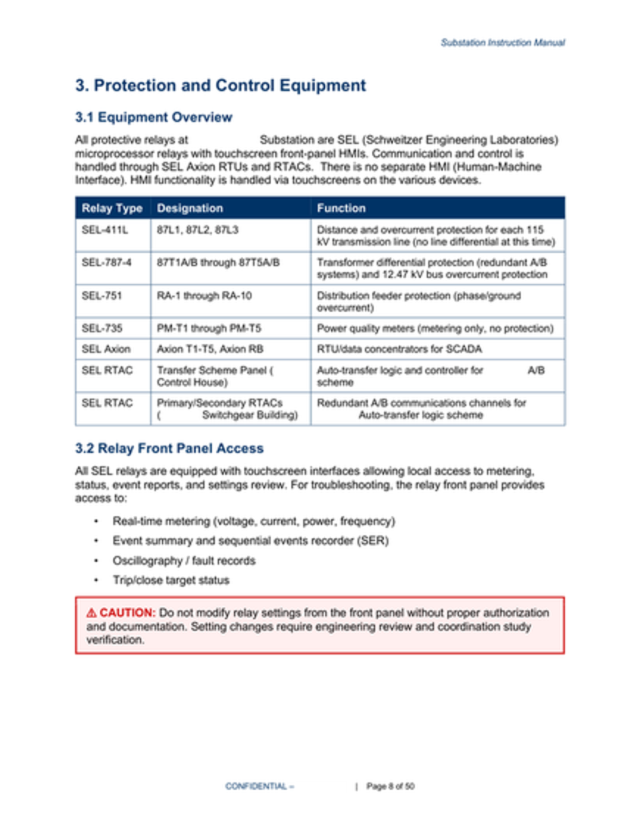
A public utility district finished a major substation rebuild and needed the documentation finished too: an operations manual, organized records, and closeout. Our team wrote the 49-page substation instruction manual and delivered the record set.
WRITTEN FOR THE PEOPLE WHO RUN IT
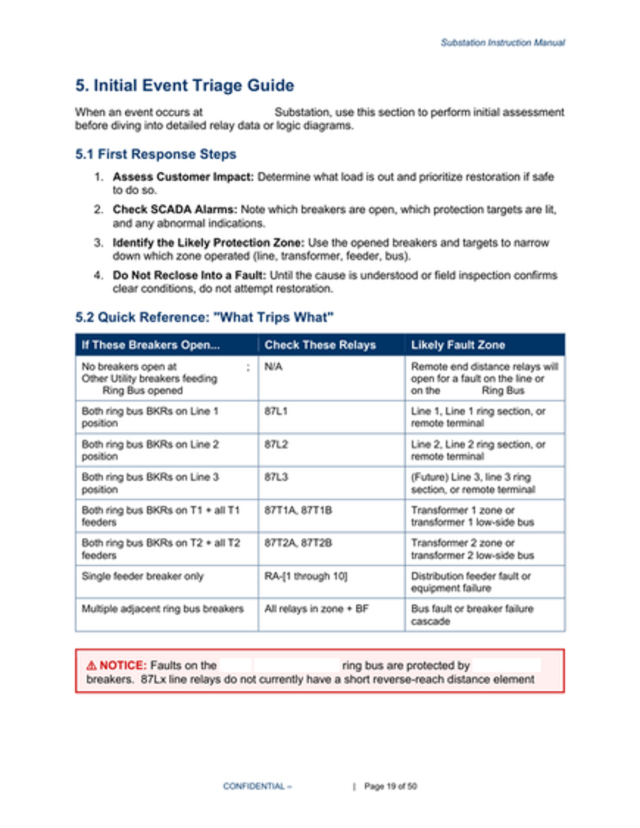
The manual covers equipment, protection systems, switching implications, alarm response, and event triage in one reference, with sections written for each audience from system operators to substation electricians.
SCHEMES IN PLAIN LANGUAGE
Transmission operating scenarios and the automatic transfer scheme were documented in plain language, including behaviors the operating staff had never been told about.
An undocumented scheme is not automation. It is a mystery with a trip output.
BOTTOM LINE
- A client needed their rebuilt substation explained, on paper, for keeps.
- Our team handed back the manual it never had.
Gas plant alternate-feed study
A rural electric association serves a large gas processing plant and needed to evaluate an alternate feed from its six-feeder substation. Our team performed the distribution study end to end, and validated the models before trusting them.
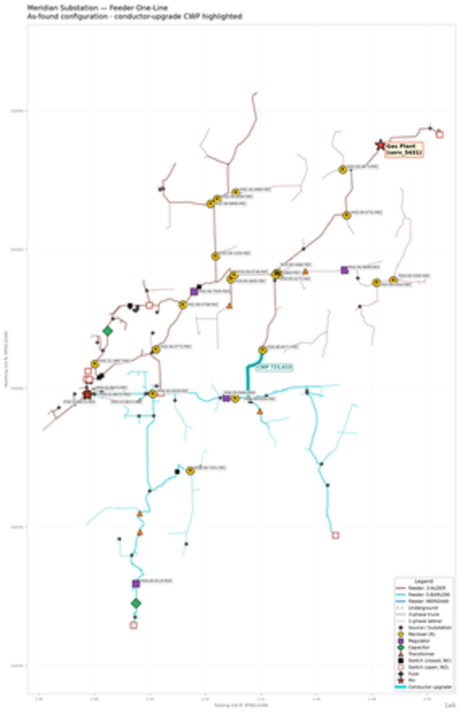
MODEL VALIDATION FIRST
The association’s GIS was compared against its WindMil engineering model. Conductor data, load allocation, and equipment records were spot-checked and corrections documented before any analysis ran.
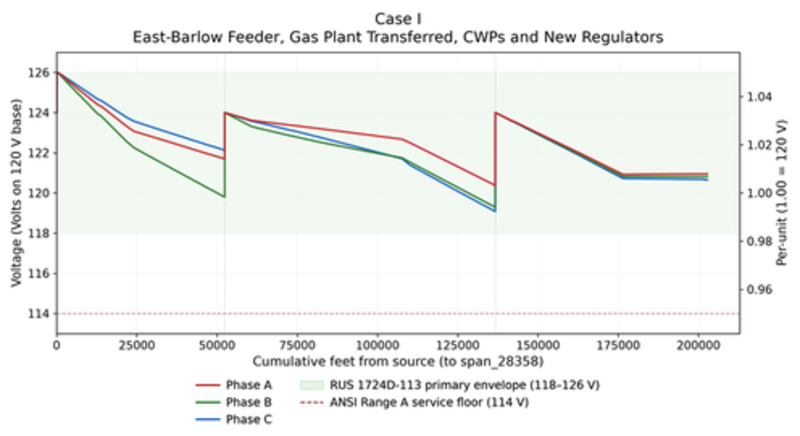
POWER FLOW, FAULTS, COORDINATION
Existing and alternate configurations were analyzed for the plant load, fault duties were run from the transmission provider’s source models, and time-current coordination was developed for the affected feeders.
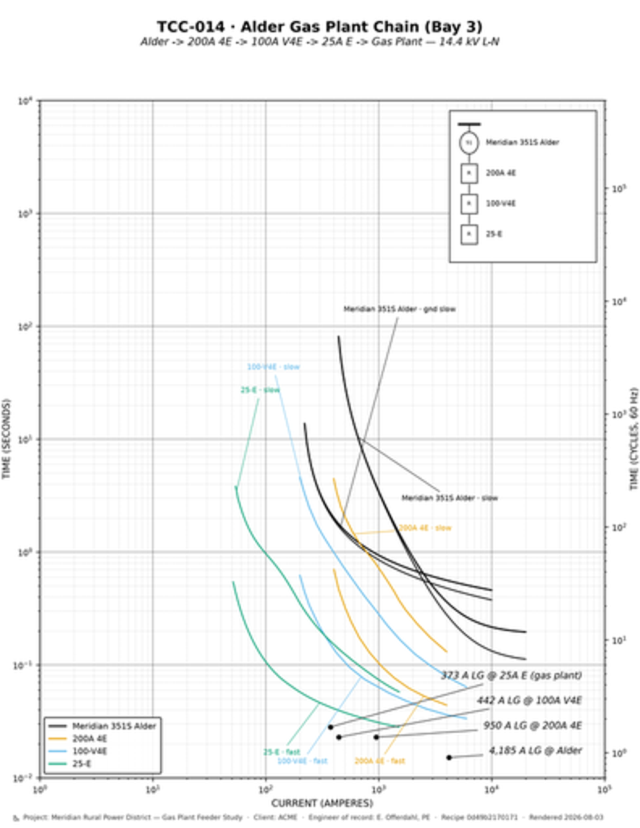
Validate the model first, so the recommendations stand on checked data.
BOTTOM LINE
- A client needed a yes-or-no on an alternate feed for their biggest customer.
- Our team checked the data, ran the study, and delivered settings they could load.
Colocation expansion, zero-outage cutover
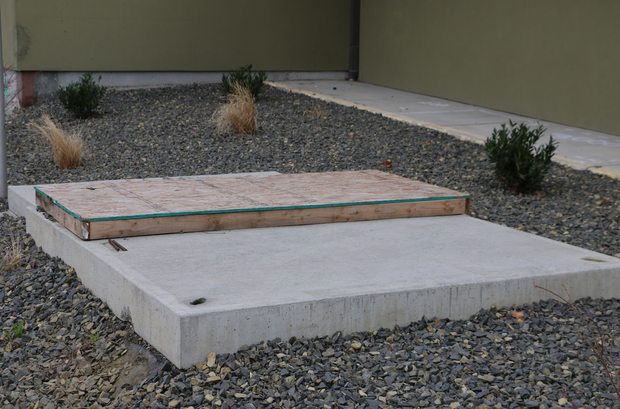
A public utility district expanded a colocation server room and needed the electrical, HVAC, and connectivity work coordinated inside a live facility, small in footprint, critical in consequence. Our team serves as the district’s project manager and single point of contact.
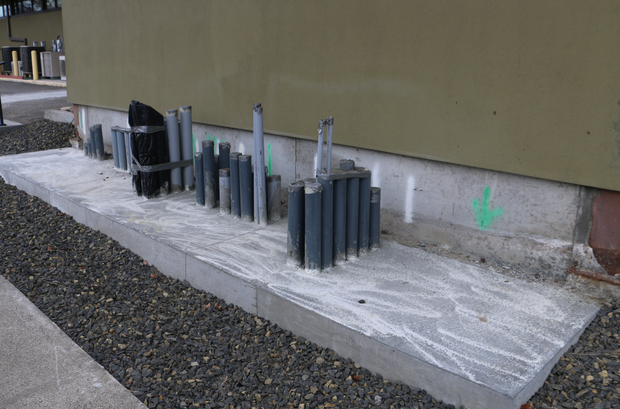
ONE SCHEDULE, ZERO OUTAGES
One consolidated schedule covers all trades, sequenced so work in the operating facility never conflicts. The equipment cutover plan is built around a simple rule: the facility stays online while the expansion goes in around it.
PROCUREMENT SUPPORT
We supported the HVAC RFP, evaluated bids, made the award recommendation, and track permits and closeout documentation.
BOTTOM LINE
- A client needed an expansion threaded through a facility that could not blink.
- Our team sequenced it so it never did.
STAKR: service estimates at the click of a pin
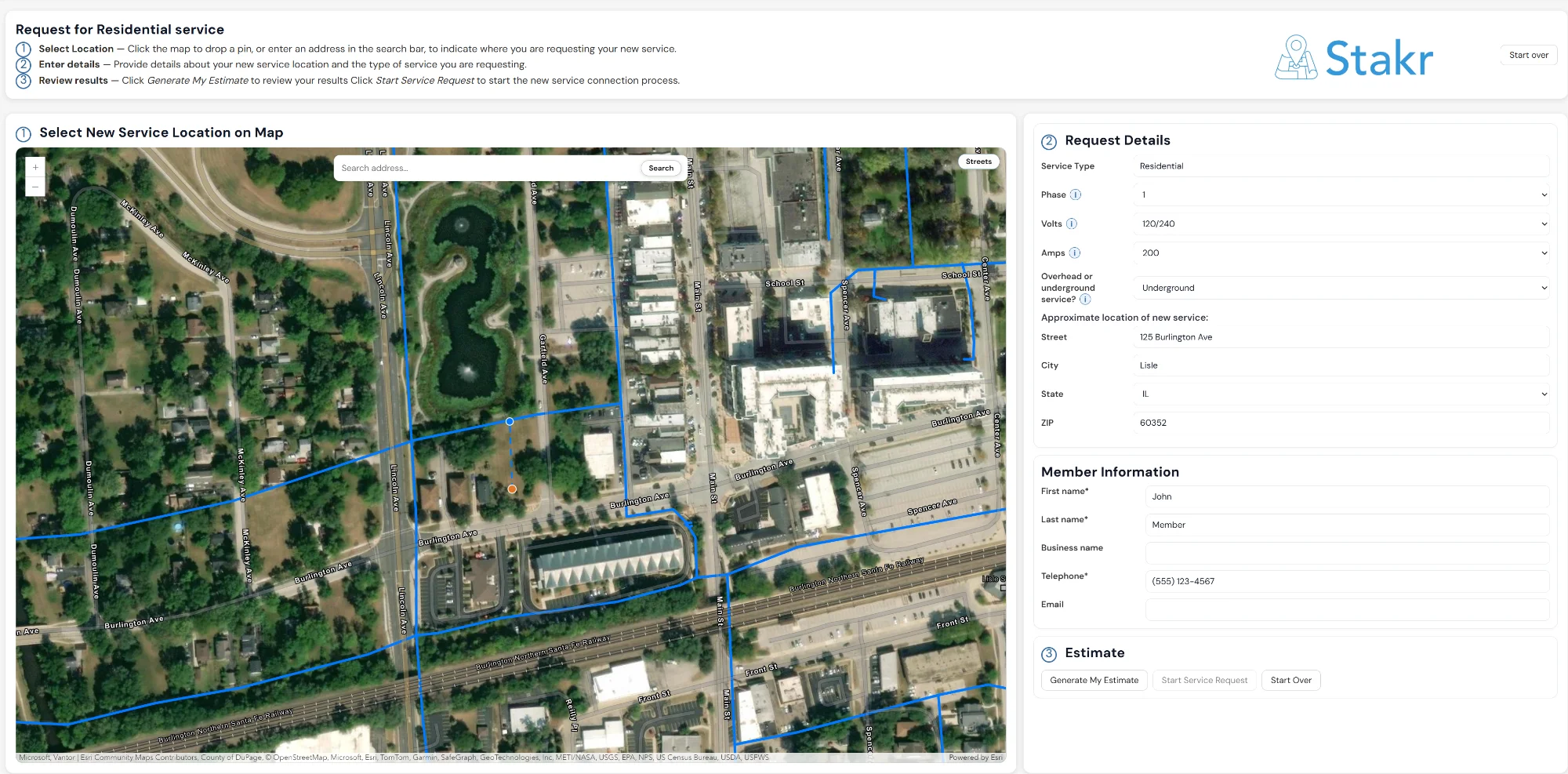
A rural electric cooperative needed quick, accurate service estimates for members. The old way took days of back-and-forth. Our team built STAKR, a web application where members drop a pin on a map and get a professional estimate in under a minute.
HOW IT WORKS
- Map pin with automatic parcel identification and geocoding
- Real-time cost calculation from the cooperative’s own assembly cost tables
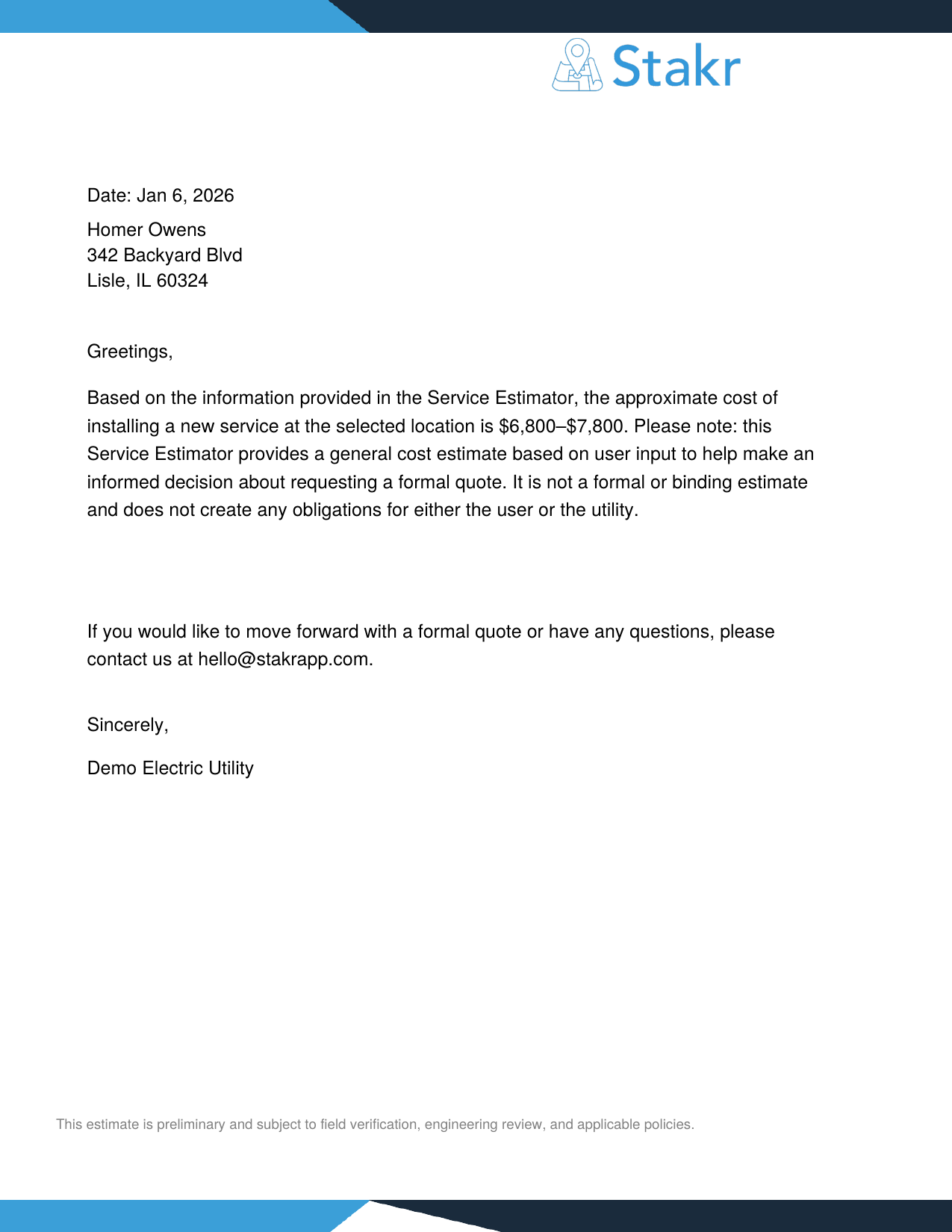
- Instant PDF estimate letter, emailed to the member
- Multi-tenant cloud deployment with per-cooperative branding
The best engineering deliverable is one your members use without calling you.
STAKR is a live product. See it at stakrapp.com.
BOTTOM LINE
- A client needed fewer estimate calls and faster member answers.
- Our team built the tool that does both.
Asset management implementation, every record migrated
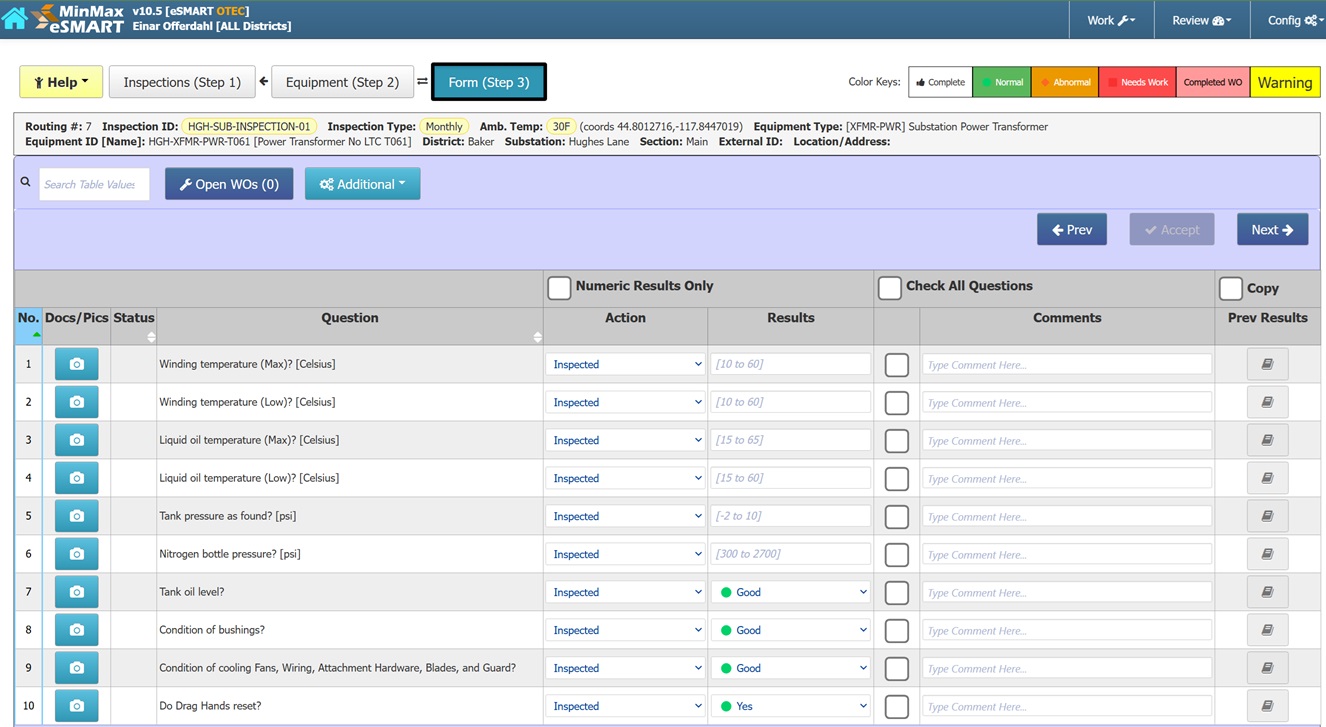
An electric utility outgrew its aging asset management software and upgraded to MinMax eSmart, but needed extra hands to keep the project on schedule. Our team implemented the system and moved the data.
THE UNGLAMOROUS PART DONE RIGHT
- Database configuration built for how the utility actually maintains equipment
- Asset data converted from SQL databases, spreadsheets, and field collection
- QA/QC on every conversion so nothing was lost in the move
- New inspection forms generated for the field
An asset system is only as good as the data somebody bothered to verify.
BOTTOM LINE
- A client needed a new asset system stood up without losing their history.
- Our team converted it, checked it, and put it to work.
Twenty poles, five utilities, four weeks
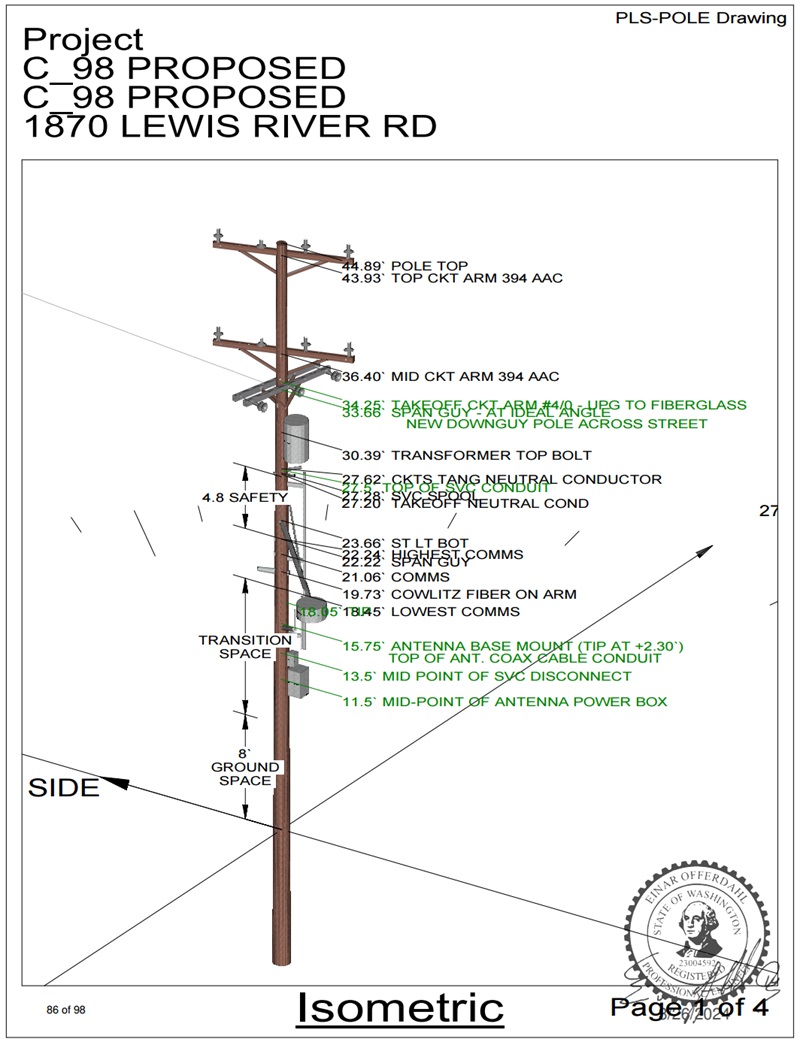
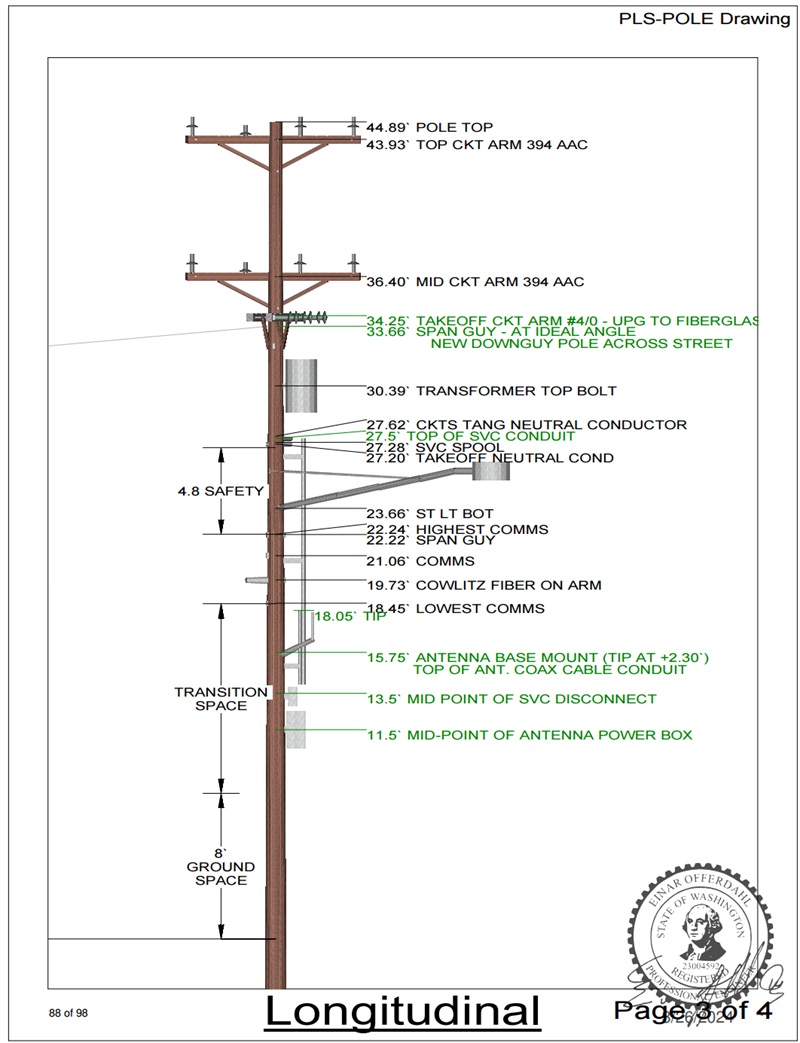
A gas utility committed to installing AMI meter-reading radios across Western Washington and needed approvals for 20 pole attachments spanning multiple electric utilities and jurisdictions, on a four-week clock. Our team delivered every submittal package on time.
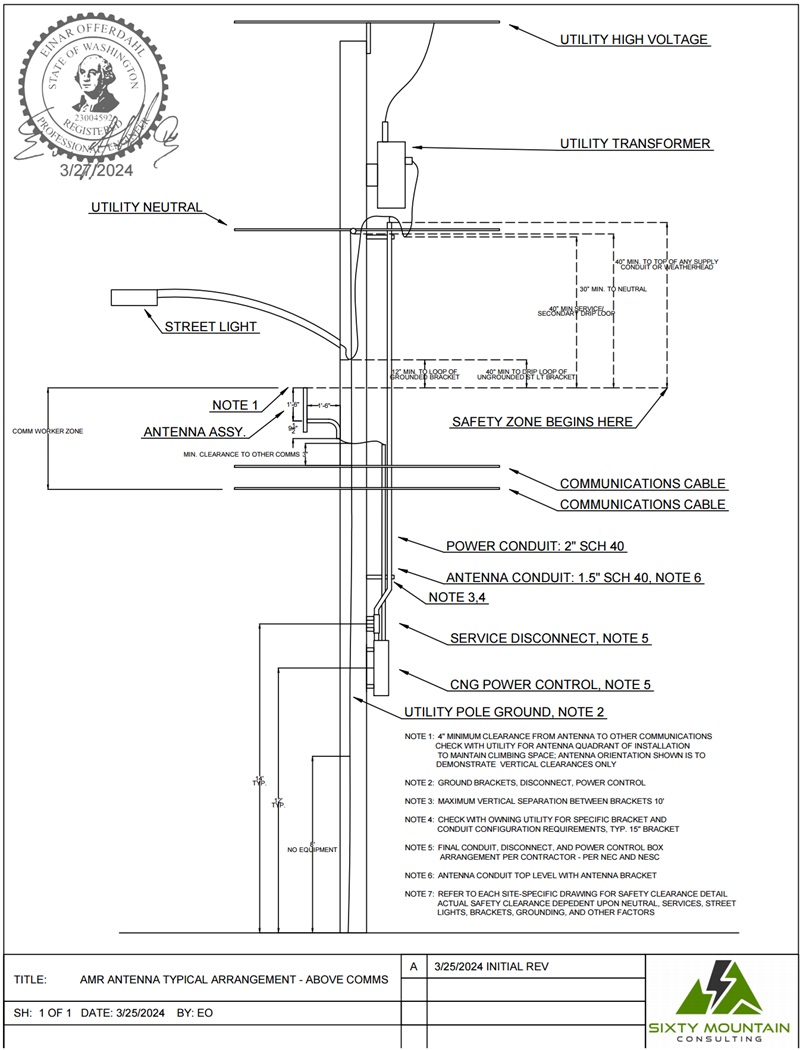
FIELD TO SUBMITTAL, FAST
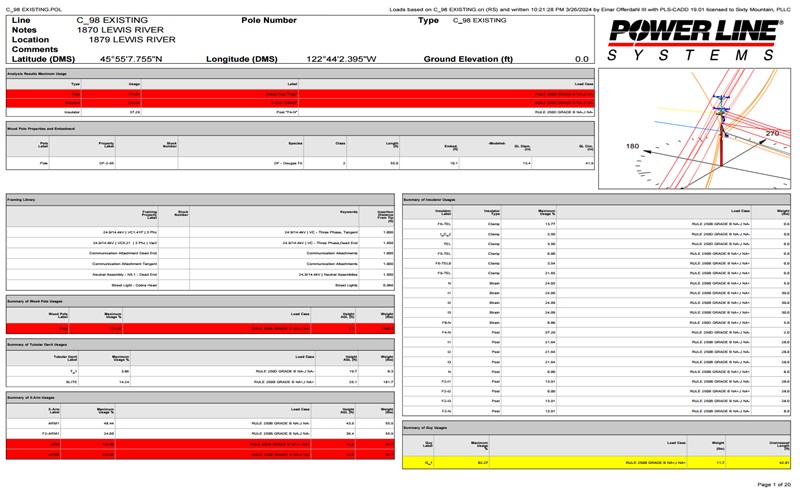
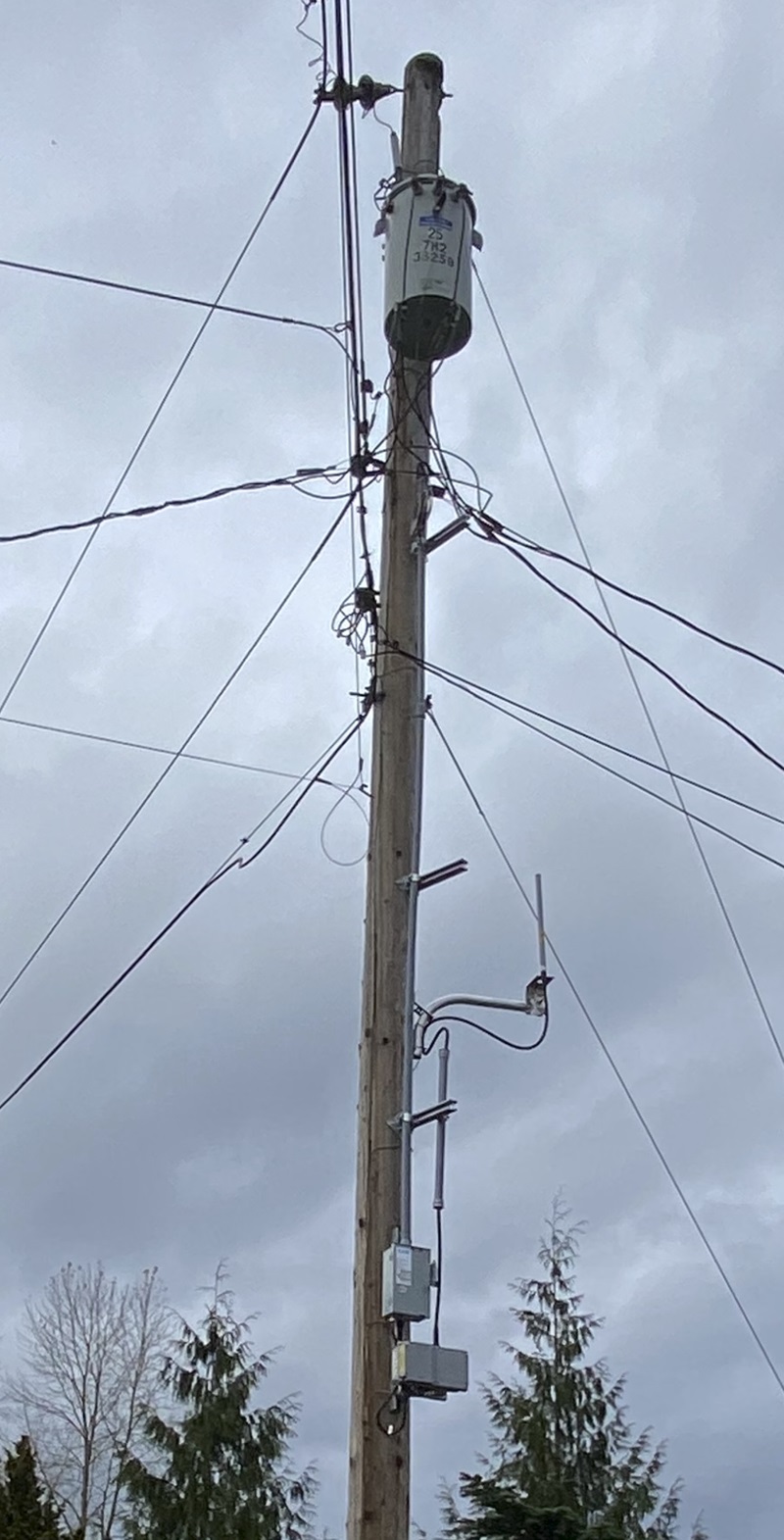
Immediate field data collection at each location, followed by pole loading and clearance analysis and the drawings each jurisdiction required for approval.
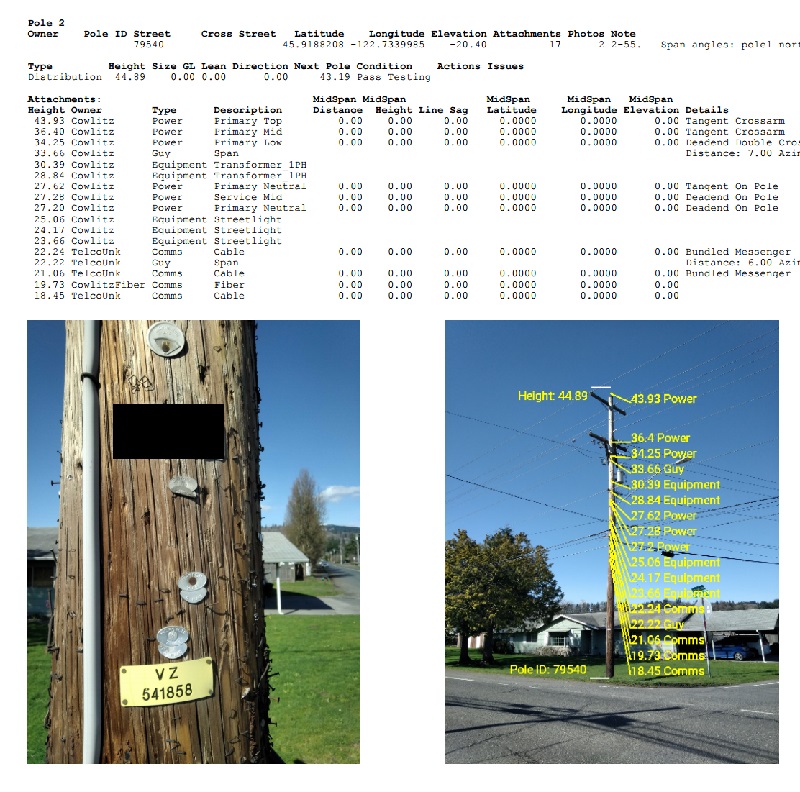
Twenty poles, five utilities, four weeks. Joint use rewards the prepared.
BOTTOM LINE
- A client needed twenty jurisdiction-ready packages in a month.
- Our team collected, analyzed, and shipped all twenty.
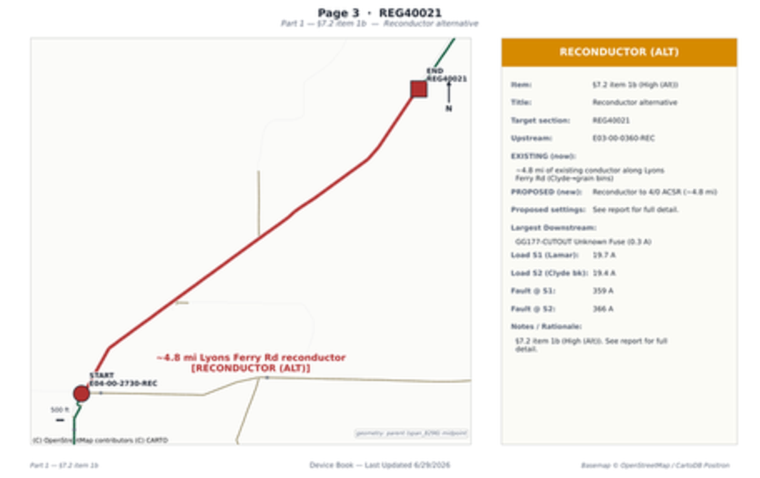
FROM THE SUBMITTAL PACKAGES
A greenfield substation, delivered on plan
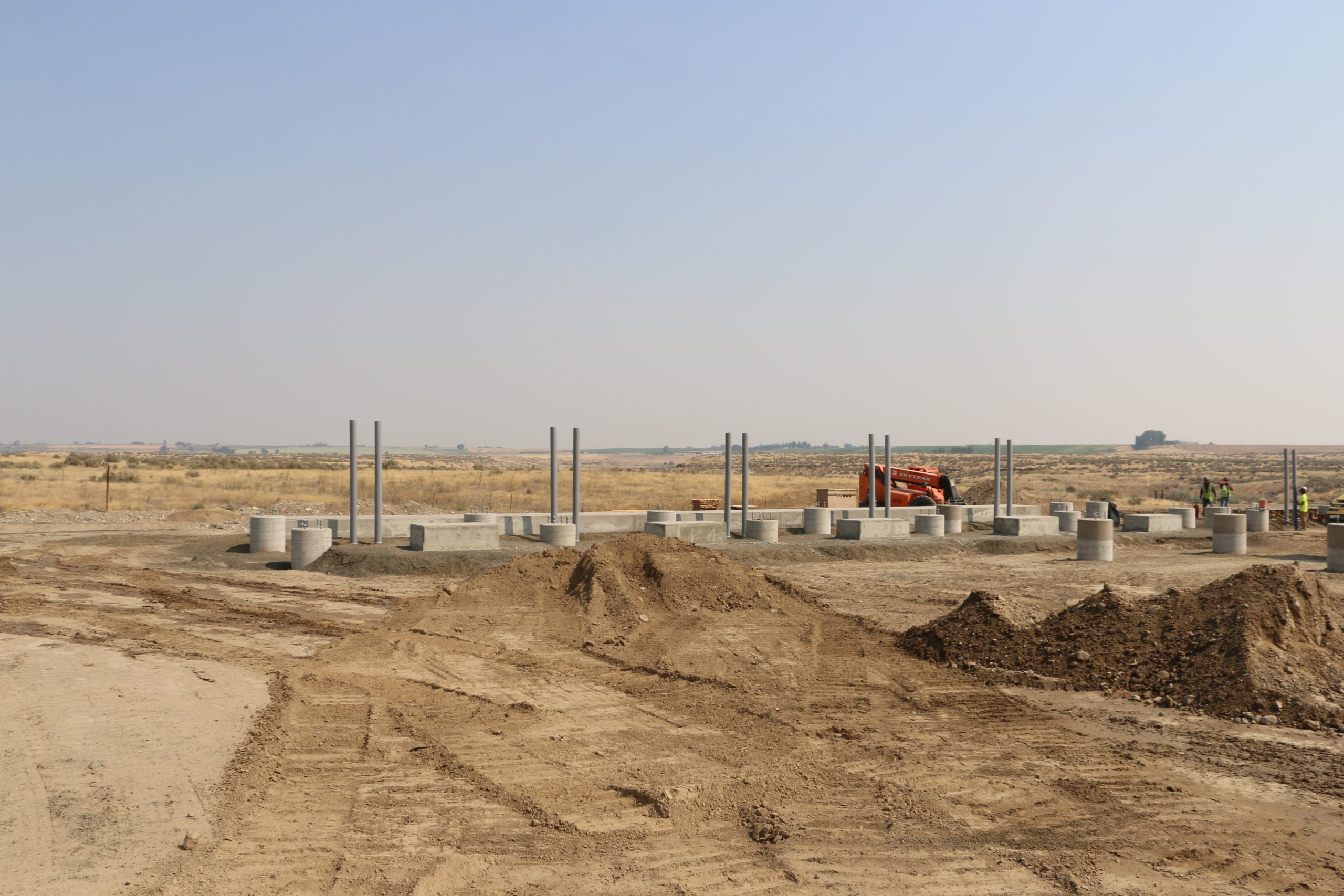
An electric cooperative is building a new 115 kV substation, plus the transmission and distribution work around it, to serve fast-growing load. They needed one firm keeping design, procurement, and construction moving as a single program. Our team serves as the owner’s program manager and engineer.
WHAT WE CARRY
- Master schedule across substation, transmission, and distribution
- Procurement of the power transformer, relay panels, reclosers, and switches
- Coordination of the design, protection, geotechnical, survey, and construction firms
- Monthly cost control the board can read in one page
- Commissioning plan through energization
The board sees where every dollar and every week stands, reconciled to the penny, every month.
WHERE IT STANDS
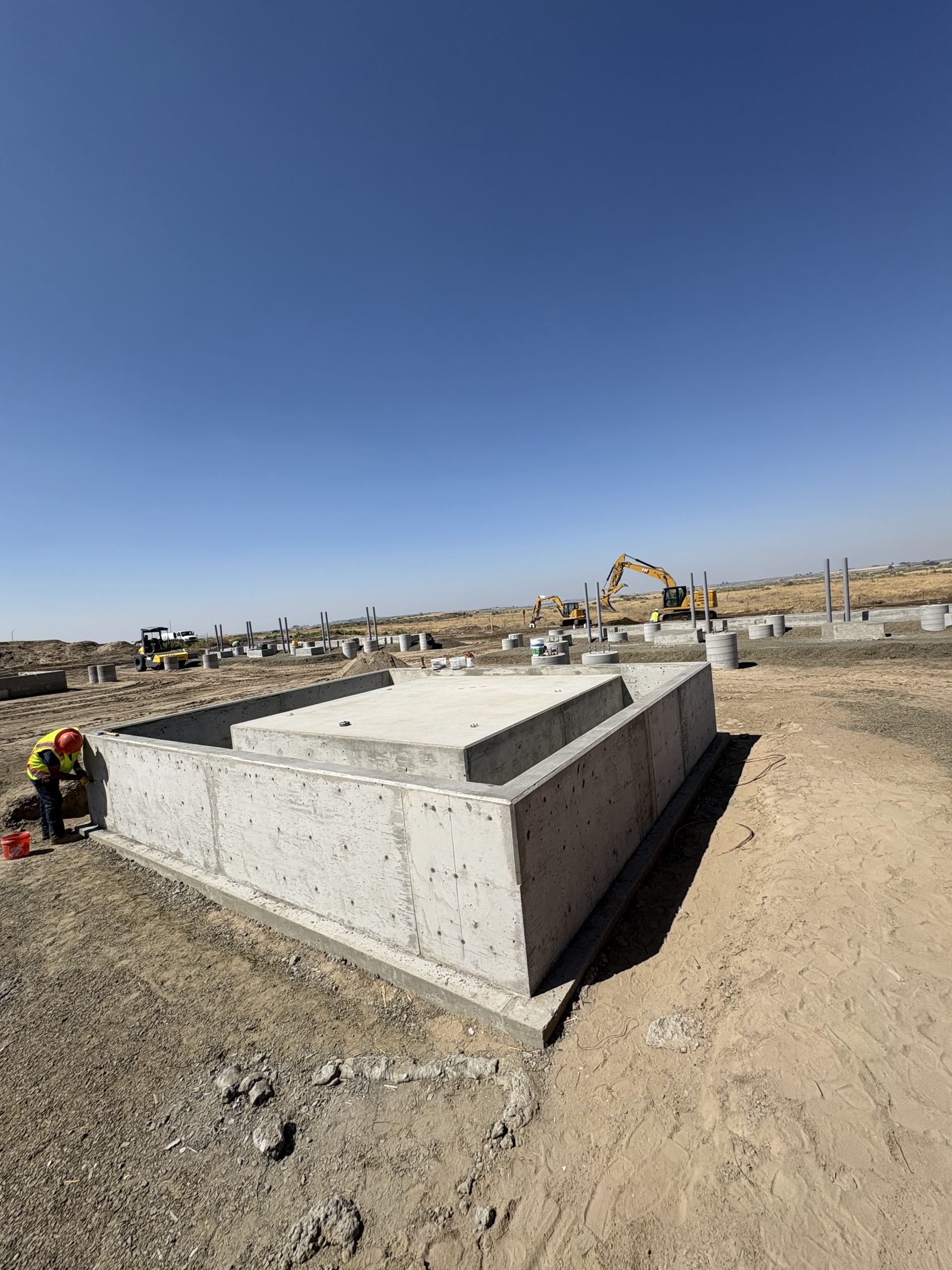
Foundations are in, steel is standing, and the transformer sets this fall. The program is tracking to an energization target of year end.
BOTTOM LINE
- A client needed a substation built without surprises.
- Our team runs the program like the money is our own.
Ten feeders, eight breakers, zero surprises
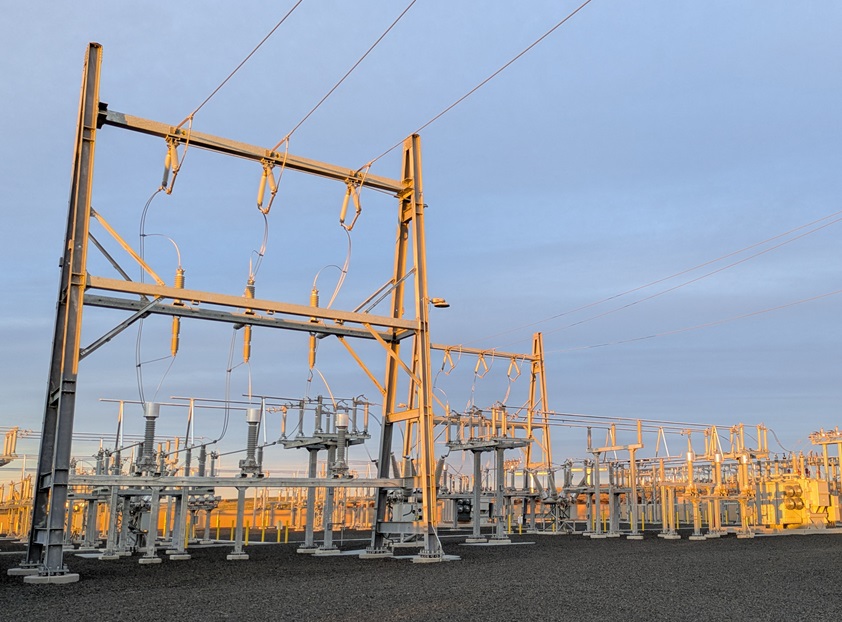
A public utility district built a new 115 to 12.47 kV substation with an 8-position ring bus and ten feeder getaways. Our team provided the owner’s commissioning: relay testing, design review, drafting, and the troubleshooting that keeps an energization date honest.
RELAY AND CT TESTING
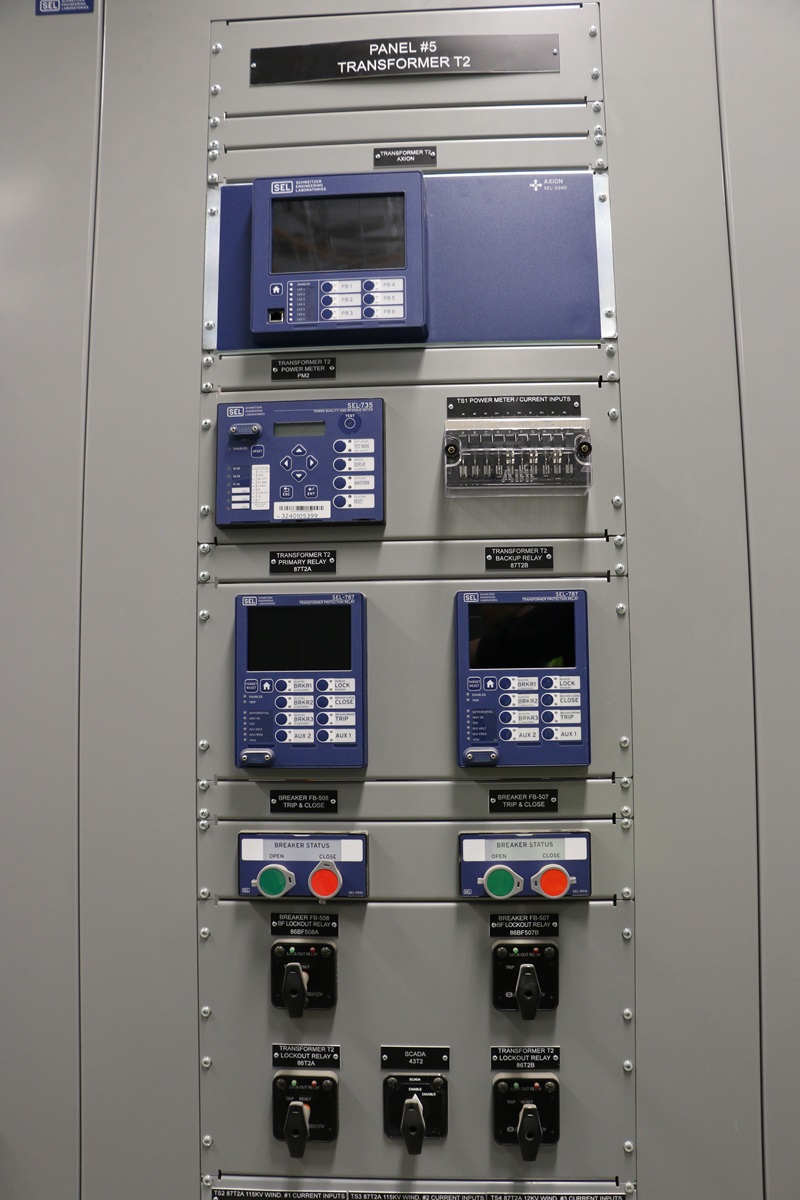
We wrote the relay test plans, then performed relay testing, logic verification, and current transformer testing at every position.
DESIGN REVIEW
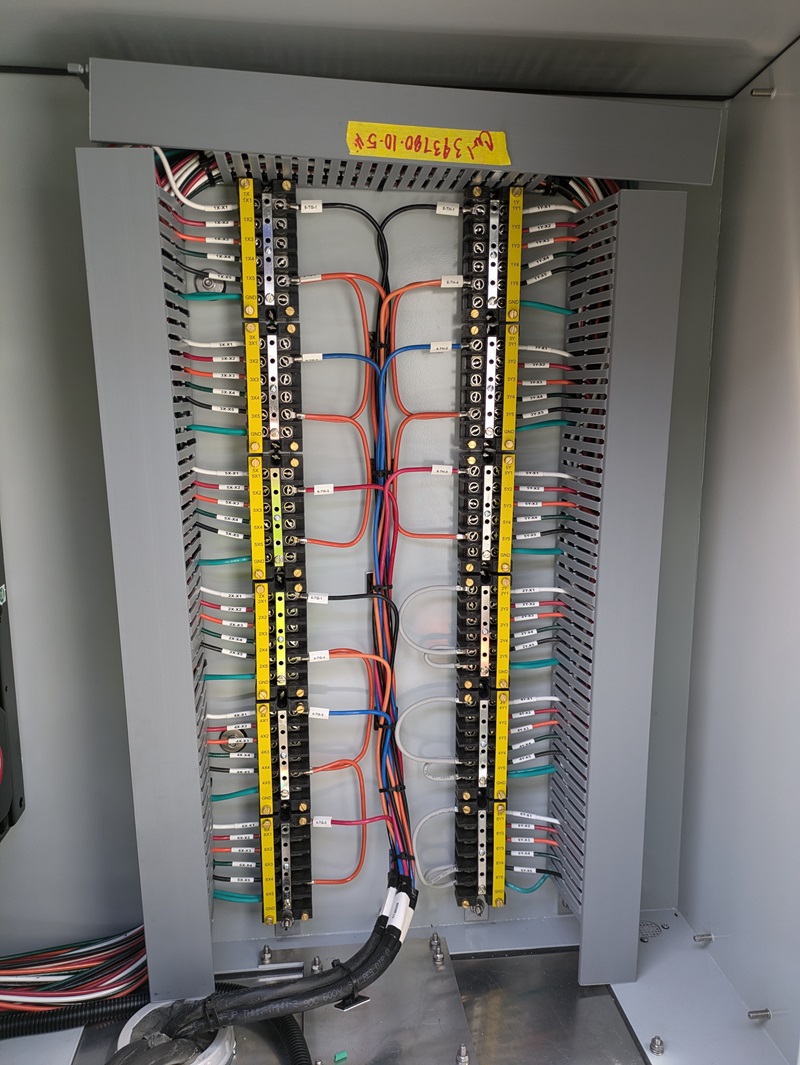
Acting as the client’s engineer, we reviewed and corrected relay design submittals, calculations, time-current coordination, logic packages, and controller settings before they reached the field.
On a ring bus, one unverified interlock does not cause an outage. It causes a sequence of them.
COMMISSIONING
We developed and ran commissioning procedures for batteries, breakers, LTCs, logic schemes, SCADA, and the power transformers, through energization.
BOTTOM LINE
- A client needed a complex substation proven before it carried load.
- Our team tested every trip path and signed our name to the results.
24 miles of 115 kV, re-rated from LiDAR to load limit
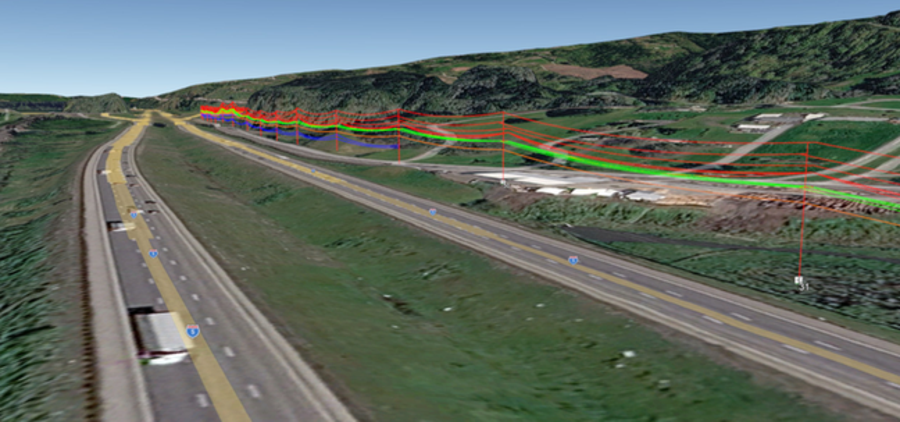
A public utility district needed updated ratings for about 24 miles of 115 kV transmission across six line segments. With line modeling led by our transmission partner, Anders Dahl, PE of Grasher Consulting, our team carried the analysis from LiDAR survey data to delivered ratings, with every limit traceable to the spans that control it.
LINE MODELING
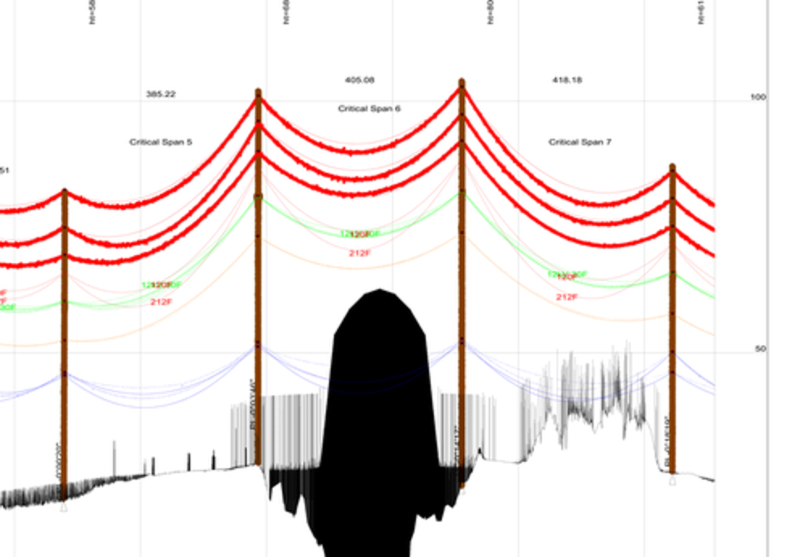
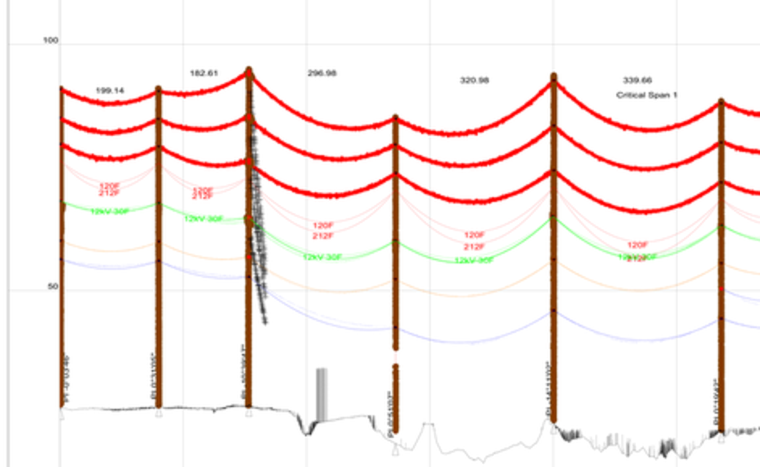
Each segment was modeled in PLS-CADD from LiDAR and field records: conductor types, attachment heights, and the underbuilt distribution that complicates every real corridor.
CLEARANCE ANALYSIS
Segments were checked against NESC clearances with the district’s adopted buffers, and a maximum safe operating temperature was established for each.
A line rating you cannot trace to a controlling span is a guess with a stamp on it. Every one of ours traces.
BOTTOM LINE
- A client needed to know what their transmission could really carry.
- Our team measured it, modeled it, and put the controlling spans on paper.